21.3 C
Indonesia
Sunday, March 15, 2026

Hong Kong Firefighter, 37, Dies While Battling Apartment Blaze, Was Going To Be Married In 1 Month

Tributes have poured in for Ho Wai-ho, left, the firefighter killed in the Tai Po blaze. (Photo: Handout/South China Morning Post/The Editor).

THE EDITOR – A 37-year-old firefighter has been identified among the casualties of the deadly Hong Kong apartment complex fire that broke out on Nov. 26, 2025.

According to a statement by the Hong Kong government, Ho Wai Ho had served at the Fire Services Department for nine years.

During the fire, he was fighting the blaze on the ground floor of the building, and shortly become  uncontactable at around 3:30pm on November 26, Mothership reported.

About half an hour later, Ho was found collapsed in an open area near the apartment complex, having sustained facial burns.

He was rushed to the hospital, but unfortunately passed away at 4:41pm.

Planning to Get Married Next Month

Ho was going to get married to his girlfriend of more than 10 years, Sinchew reported, citing a Taiwanese media outlet.

His Instagram is filled with photos of himself with his girlfriend.

He wrote in the caption of one: “Thank you very much. Even if you find me annoying, I need to say it 100 times. Love u. You must always laugh as happily as this!”

Tributes

China’s President Xi Jinping extended his condolences to Ho, the other victims of the fire and their families, as well as Hong Kong’s Chief Executive John Lee, Chinese state media CCTV reported.

The director of the fire service, Andy Yeung, expressed profound sadness over Ho’s passing.

In the statement, Yeung said that he was “profoundly grieved at the loss of this dedicated and gallant fireman.”

“All of our colleagues are deeply saddened by the loss of such a devoted comrade,” he added.

The fire service’s welfare officer and psychological services unit are closely liaising with Ho’s family to provide them with assistance during this difficult time.

On Threads, a user said to be a friend of Ho’s posted a photo with Ho taken when Ho graduated from the fire academy.

“Please remember the face of a hero,” the friend wrote in the caption. “We will not forget you. Thank you for sacrificing everything for us. Your last shift has ended. Rest in peace.”

The fire service said that at least one other firefighter is in hospital, The Standard reported.

Politico: Pollution From Coal Plants Was Dropping. Then Came Trump and AI

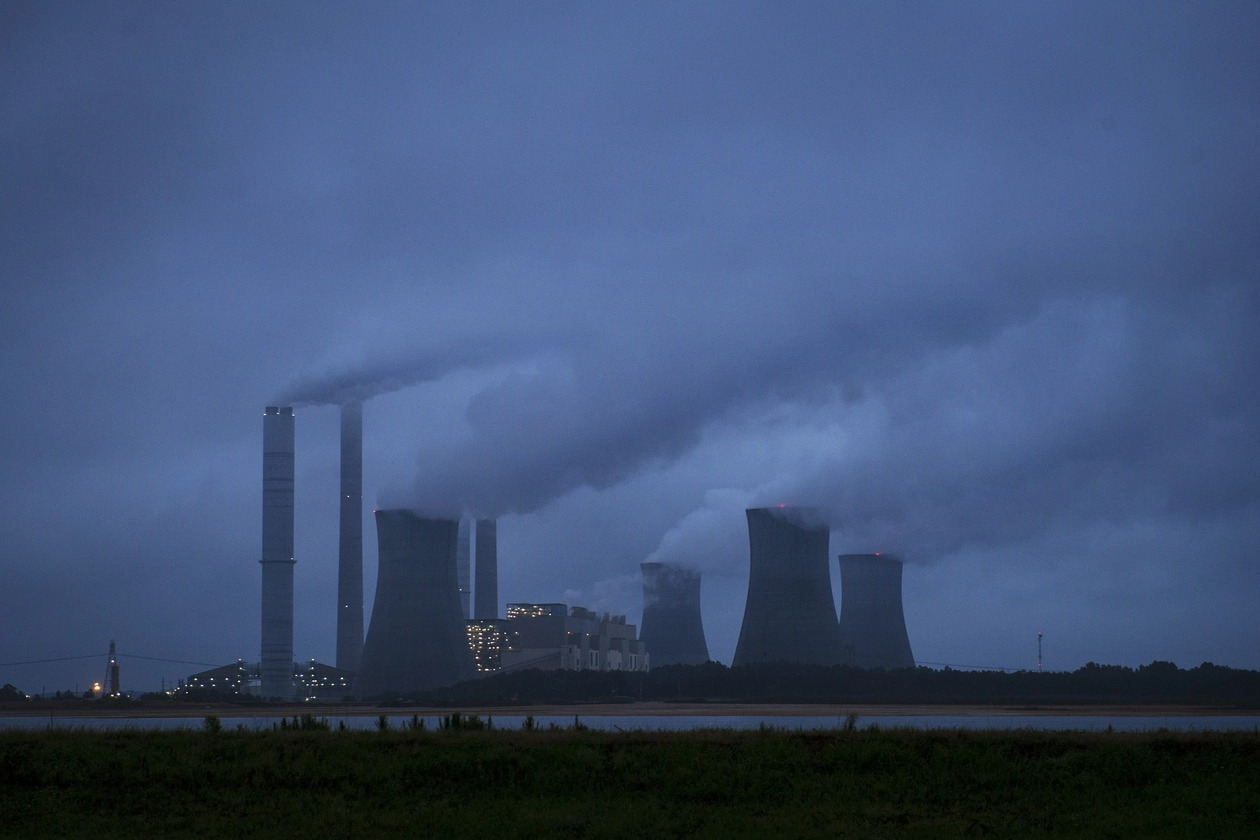
Illustration by Claudine Hellmuth/POLITICO source images via iStock/The Editor

THE EDITOR – The Trump administration is allowing coal plants to release more pollution at a time when utilities across the country are opting to save their aging coal facilities from retirement so they can power artificial intelligence.

Those twin trends — weaker pollution safeguards and accelerated coal use — could have dramatic implications for rising temperatures and the health of people living near coal plants whose emissions are linked to heart disease, respiratory illness and lower IQs.

The data center building boom threatens to halt a 15-year decline in U.S. coal use as the power industry races to meet the skyrocketing energy demands of AI supercomputers. That’s because the breakneck construction of AI hubs is pushing utilities to increase their reliance on coal plants that had been headed toward retirement, while outracing efforts to build cleaner sources of power such as nuclear, natural gas or renewables.

President Donald Trump has amplified those effects by lowering hurdles for fossil fuel development, obstructing renewable energy projects and seeking to erase or weaken regulations that constrained the release of soot, mercury and climate pollution from coal plants.

The turnaround is stark: More than 500 coal-fired power plants retired between 2010 and 2019, according to federal data. At the same time, federal regulations reduced the amount of pollution released from the plants.

But in the past two years, utilities have delayed the retirements of more than 30 generating units at 15 coal plants across the country to provide power to data centers, according to an analysis from the sustainability think tank Frontier Group. The Trump administration ordered two power plants — a coal facility in Michigan and an oil and gas plant in Pennsylvania — to remain open past their closure dates.

Some delays are expected to last a few years, but others could be much longer. Dominion Energy has postponed the retirement of its Virginia Clover Power Station southeast of Lynchburg by 20 years, to 2045. Two oil-burning power plants have also delayed retirements due to the energy demands of data centers, according to the Frontier Group.

Altogether, the 15 fossil fuel plants emitted almost 65 million metric tons of greenhouse gases in 2023 — more than was released by all pollution sources in Massachusetts. That stands to impede efforts to lessen the nation’s carbon pollution. Coal plants accounted for about 15 percent of U.S. power generation last year, down from roughly 50 percent in 2001. Yet climate pollution is rising this year in the U.S., in part because of increased coal use.

EPA press secretary Brigit Hirsch said the administration’s rollbacks of Biden-era regulations will not harm public health because pollution limits from more than a decade ago will remain in effect.

“We’re bound by actual laws passed by Congress, not wishful thinking from climate zealots who want to shut down reliable power keeping American AI dominance online,” she said. “Reliable coal plants supporting America’s technological leadership isn’t the crisis activists claim, it’s commonsense energy policy.”

But the side-by-side trends of scrapping pollution rules and prolonging the lives of coal plants could endanger people. Scientists have found dangerous health effects from coal pollution.

Two Georgia coal plants being kept online for AI were responsible for thousands of deaths over the past 20 years, according to a 2023 peer-reviewed study published in Science and funded by the National Institutes of Health. One of the facilities, Plant Bowen northwest of Atlanta, was ranked as the second-deadliest coal plant in the country, contributing to the deaths of 7,500 people, the study said.

Bowen and Plant Scherer near Macon, one of the largest coal facilities in the world, were supposed to be converted to burn gas by the end of this decade. Then in January, Georgia Power said both plants would keep burning coal through 2039 to keep up with demand from AI. In April, Trump gave both plants a two-year reprieve from requirements to reduce mercury and soot pollution beginning in 2027.

The decision to keep the Bowen and Scherer plants running was “primarily driven by the anticipated capacity demands” through 2031, Georgia Power spokesperson Matthew Kent said. 

But he said the utility’s request for exemptions from mercury pollution rules stemmed from concerns about the accuracy of monitoring technology, and was “not in any way related to concerns about powering data centers.”

Those plants are not the only ones getting reprieves.

Nearly 70 power plants have been allowed to ignore the 2027 requirement to reduce mercury and soot pollution, while the Environmental Protection Agency rewrites those rules to permanently allow more emissions. The agency is also weakening rules aimed at limiting mercury and other cancer-causing pollutants in waterways, and it’s scrapping or delaying power plant rules that would limit soot and planet-warming emissions.

Plant Scherer in Juliette, Georgia. (Foto: John Amis/AP/Politico/The Editor)

The rapid expansion of artificial intelligence data centers” means “America’s coal power plants must remain in operation,” EPA Administrator Lee Zeldin co-wrote in a Fox News op-ed in September.

Many of the coal plant retirements were delayed before Trump took office. But utilities have cited the administration — and its expected rollbacks — in decisions to postpone at least two retirements.

Five of the 15 coal plants with delayed retirements have received pollution passes from the administration. Those include Bowen, Scherer and plants in Illinois, Mississippi and West Virginia. Together, they emitted nearly 190 pounds of mercury in 2023, according to an analysis of EPA pollution data by POLITICO’s E&E News.

“You are seeing utilities and grid operators emboldened by these changes in the regulatory landscape,” said Quentin Good, a policy analyst with Frontier Group. “These are power plants that were scheduled to close this year or next year, and they would not be polluting and burning coal if not for AI.”

Environmental and public health groups have filed legal challenges against the administration for waiving the pollution requirements, noting that the action relies on a never-before-used provision that allows exemptions for national security reasons.

The Trump administration’s use of the exemption, their lawsuit says, “jeopardizes the realization of … public health benefits without any proper basis.”

The White House did not respond to a request for comment.

AI’s pollution ‘cost’

Generative AI is expanding the amount of space and power that data centers need for computing and communication. AI chatbots use more electricity when responding to user queries than regular internet searches. So-called hyperscale data centers can sprawl more than 200,000 square feet, and use as much power as 50,000 homes.

That has strained utilities, many of which have proposed building natural gas plants and pipelines to keep up. But building infrastructure doesn’t happen overnight, so utilities are turning to aging coal plants.

That comes with health costs.

Researchers at the University of California found that training one large language AI model can create more pollution than 10,000 round-trips by car between Los Angeles and New York City. The 2024 study also estimated that the pollution from powering all U.S. data centers could impose $20 billion in annual health costs by 2030.

Those calculations are “very conservative,” said co-author Shaolei Ren, a professor of computer engineering at the University of California, Riverside. The estimates were made before the Trump administration began rolling back pollution limits and before many coal plants delayed their retirements.

“I generally agree that we need AI, but the air pollution, the climate pollution, we can measure that, and I think we need to think about that cost,” he said.

Pollution from coal plants is already “more toxic than from other sources,” said Francesca Dominici, a population and data scientist at the Harvard T.H. Chan School of Public Health.

When EPA finalized its mercury and air toxics rules last year, months before President Joe Biden left office, it predicted that by 2028 the regulations would prevent the release of 1,000 pounds of mercury and 770 tons of fine particulate matter into the air.

Around the same time, the Biden administration finalized a greenhouse gas regulation for power plants that put new limits on planet-warming emissions while also reducing soot and other pollution. EPA is now working to repeal the climate rule and weaken the mercury regulation to revert pollution limits to those established in 2012.

An Amazon Web Services data center in Boardman, Oregon. (Foto: Jenny Kane/AP/Politico/The Editor)

The agency is also trying to delay another Biden-era coal plant rule that limited the release of a carcinogen called bromide into wastewater for the first time. The rule was projected to avoid 100 cases of bladder cancer annually. If that delay and others are successful, coal plants would still have to comply with rules written during the previous Trump administration that had less-stringent mercury limits but none on bromide.

Hirsch, the EPA spokesperson, noted that the 2012 mercury air rules have been “highly effective,” citing agency data showing that the regulation had reduced mercury emissions 90 percent by 2021.

“Communities have robust federal protections that have already delivered dramatic results,” Hirsch said. “The Trump EPA will ensure ALL Americans have clean air, land and water while Powering the Great American Comeback and making America the AI capital of the world.”

Powering AI

One-third of the coal plants being kept online to power AI are in the mid-Atlantic region of the United States and will be used to power so-called Data Center Alley, a three-county swath in Virginia that could soon be home to 400 or more data centers.

That has made future electricity demand skyrocket in Dominion Energy’s Virginia service territory, where the need for power is expected to increase 85 percent over the next 15 years, according to projections from PJM Interconnection, the region’s grid operator.

Virginia can’t provide enough power itself, so PJM has asked two Maryland coal plants to delay retirements.

A third fossil fuel plant in PJM’s network, Eddystone Generating Station in Pennsylvania, had been scheduled to retire in May 2025. But the Department of Energy ordered it to stay online — and keep burning oil — because closing it “would exacerbate … resource adequacy issues.” The order was extended through February.

The department has issued similar orders for coal plants, including J.H. Campbell in Michigan. The order came days before the plant was set to stop operating in May. That order has been extended twice, and the plant must now stay online through February.

A DOE spokesperson, Ben Dietderich, said the orders were meant to prevent “unnecessary power outages” due to “premature retirement of reliable power plants, which have included coal, oil and natural gas plants.”

The projected power needs of Georgia’s data centers are delaying the retirement of three coal plants — including one in Mississippi.

The data center boom could triple Georgia’s electricity demand over the next decade, according to Georgia Power. A recent filing by the utility estimates that “large load” projects will require more than 51,000 megawatts of power through the mid-2030s.

Microsoft, which is constructing data centers in three Georgia locations, supported Georgia Power’s decision to delay coal retirements. The tech company, which projects it will be carbon neutral by 2030, sided with Georgia Power when environmental groups legally challenged the utility’s integrated resource plan this summer.

“Microsoft submits that it has a substantial interest in these proceedings as a large consumer of electricity from Georgia Power with particularized needs for electric service,” the company wrote in its motion to intervene.

To help it meet data center demand, Georgia Power is already purchasing 600 megawatts of power from a Mississippi coal plant, the Victor J. Daniel Electric Generating Plant, which had been set to retire by 2027 before its operations were extended.

When the Georgia Public Utilities Commission met to approve the deal in 2024, Commissioner Tim Echols said buying out-of-state energy had a benefit: “The pollution’s not in Georgia, right?”

“It’s in Mississippi. It’s in other places,” he said. Echols lost his reelection bid earlier this month.

‘Going back in time’

Georgia environmental groups have questioned whether the energy demand from data centers is illusory. When Georgia Power announced its plans in January to keep Bowen and Scherer open, roughly half the hyperscale projects included in its planning documents had not committed to coming to the state.

“They are trying to make it possible for data centers to come here, but in the meantime the people who are going to pay the price with their health are regular Georgians,” said Jennifer Whitfield, a senior attorney with the Southern Environmental Law Center.

Pollution from Bowen and Scherer blows across the state, raising unhealthy levels of soot and smog as far away as Atlanta, said Stan Meiburg, who spent 18 years as EPA’s deputy regional administrator for the Southeast.

The coal plants also create pollution problems for people whose homes surround the megafacilities. Last year, Georgia Power settled a lawsuit with dozens of people who alleged that Scherer improperly dumped coal ash into local groundwater. They argued that it had contaminated their wells and caused health problems, including cancer.

Andrea Goolsby, who grew up in Juliette, Georgia, under the billowing pollution of Scherer, considers herself luckier than most because her family did not rely on well water. Still, she remembers the white siding of her grandmother’s house being colored by black soot and learning at an early age not to eat fish caught nearby because they were laden with mercury.

She and her neighbors breathed a sigh of relief in 2022 when Georgia Power announced it would retire the plant. Then the utility changed plans this year.

“We thought this would be done by now, but it feels like we’re going back in time,” said Goolsby, a conservative Republican who voted for Trump.

She expected the administration to roll back some environmental protections but said she was shocked when EPA exempted Scherer from mercury limits.

“I don’t understand why they are giving pollution passes that affect people’s health,” Goolsby said. “Everyone should have to follow the rules, even if you are AI. We live here, this is our life, but our interests are not in the forefront.”

Ini Nama-Nama Perusahaan Tambang Yang Berada di Sekitar Area Banjir Bandang di Tapanuli Selatan dan Tapanuli Tengah

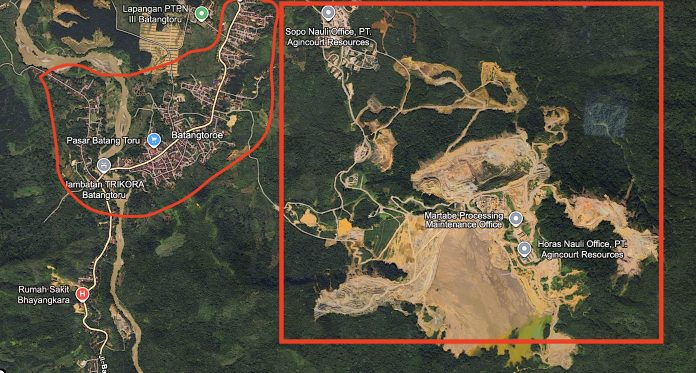
(Kiri) area perumahan warga yang sebagian besar berada di Kecamatan Batang Toru di Tapanuli Selatan dan (kanan) area tambang milik PT Agincourt Resources dan EMR Australia (Foto: Google Earth/The Editor)

THE EDITOR – Desa-desa yang terkepung oleh banjir bandang yang menewaskan puluhan orang dan menghancurkan rumah warga di Tapanuli Tengah dan Tapanuli Selatan ternyata dikelilingi oleh berbagai macam jenis tambang.

Dari hasil penelusuran redaksi The Editor melalui alat pemetaan bumi Google Earth, terlihat bila Kecamatan Batang Toru di Tapanuli Selatan berada dekat dengan beberapa perusahaan tambang yang luas area galiannya melebihi desa-desa warga.

APA SAJA JENIS TAMBANG TERSEBUT? SIAPA PEMILIKNYA?

1. PT Agincourt Resources dan EMR Australia

 PT Agincourt Resources adalah perusahaan pertambangan emas dan perak yang memiliki Tambang Emas Martabe di Tapanuli Selatan, Sumatera Utara. 

OG Indonesia melaporkan bahwa akuisisi Tambang Emas Martabe yang dikelola PT Agincourt Resources telah selesai pada 17 Maret 2016. Kini G-Resources, yang tadinya pemegang saham utama PT Agincourt Resources, digantikan oleh konsorsium yang dipimpin oleh EMR Capital, sebuah perusahaan dana ekuitas pertambangan swasta asal Australia. 

Komposisi kepemilikan saham pun berubah, di mana EMR sebesar 61,4%, Farallon Capital sebanyak 20,6%, Martua Sitorus 11% dan Robert Budi Hartono serta Michael Bambang Hartono 7%. 

Dua nama terakhir merupakan orang terkaya di Indonesia tahun 2015 versi Majalah Forbes. Sementara kepemilikan saham Pemerintah Kabupaten Tapanuli Selatan dan Provinsi Sumatera Utara (Pemda) tidak mengalami perubahan.

Guna menyambut pemilik saham baru, perusahaan menunjuk Presiden Direktur Tambang Emas Martabe adalah Tim Duffy dan Presiden Komisaris Tambang Emas Martabe adalah Owen Hegarty,

2. PLTA North Sumatera Hydro Energy di Tapanuli Selatan

PT North Sumatera Hydro Energy (NSHE) adalah perusahaan yang mengembangkan dan mengoperasikan PLTA Batang Toru, dan proyek ini merupakan kerja sama investasi antara Tiongkok (China) dan Indonesia.

3. PT Pahae Julu Micro-Hydro Power atau PLTMH (Pembangkit Listrik Tenaga Hidro Mikro) Pahae Julu

4.  Geothermal PT SOL atau PT SOL Geothermal Indonesia di Tapanuli Utara

5. Perkebunan Kayu Rakyat (PKR) PT Toba Pulp Lestari di Tapanuli Utara 

PT Toba Pulp Lestari dimiliki oleh pengusaha Singapura Joseph Oetomo. Arah Pena pada Jumat (28/11/2025) menyebutku bila perubahan pengendali terjadi pada 22 Januari 2024, ketika Oetomo secara tidak langsung menguasai 1.283.649.894 saham atau 92,42% melalui Pinnacle Company Pte Ltd.

Pada Juni 2025, pengambilalihan dilanjutkan oleh Allied Hill Limited (AHL), holding investasi Hong Kong yang didirikan 11 April 2025.

AHL sepenuhnya dimiliki Everpro Investments Limited, yang pada gilirannya merupakan milik penuh Oetomo sebagai direktur.

TPL, yang sebelumnya bernama PT Inti Indorayon Utama Tbk dan pernah dimiliki taipan Sukanto Tanoto, berfokus pada produksi High Alpha Pulp (HAP) untuk kertas dan serat rayon dengan kapasitas tahunan 150.710 ton.

Perusahaan memiliki konsesi 167.912 hektare hutan tanaman industri di Sumatera Utara, termasuk Aek Nauli, Habinsaran, Tapsel, Aek Raja, dan Tele. 

Hingga kini, Oetomo tetap menjadi pemilik manfaat akhir TPL, di tengah sorotan Walhi atas dampak ekologis operasinya di kawasan Danau Toba dan sekitarnya.

6. Perkebunan Sawit PT Sago Nauli di di Tapanuli Tengah 

7. Perkebunan Sawit PTPN III Batang Toru di di Tapanuli Selatan

Hong Kong Dad Saved From Burning Building Asks How to Start Over With Nothing

William Li shows a photo taken from inside his flat during the fire on Wednesday. (Photo: Edmond So/South China Morning Post /The Editor)

THE EDITOR – William Li was alone in his family flat when blaze broke out and managed to pull one couple to safety, but he doesn’t know how to rebuild a life destroyed

Watching his young children’s faces light up with excitement, William Li felt relief, but the deep ache in his chest was overwhelming.

His son and daughter were happy he had saved their most treasured possessions – a mobile phone and an iPad – from the inferno that had just devoured their home in Hong Kong’s Wang Fuk Court on Wednesday. Thankfully, they had been at school and their mother at work at the time.

“Daddy is so great! You saved my phone!” his 10-year-old son exclaimed, cheering with his sister, seven in South China Morning Post on Saturday (29/11/2025).

They remained blissfully unaware of their father’s trembling voice and their mother’s tense, frozen expression.

Their entire life – carefully built over the years – had vanished in hours. All that remained were the two electronic devices and a few thousand Hong Kong dollars.

“People say you can always start over as long as you’re alive,” Li, 40, said. “But I wonder how? How can one start over if he has nothing at hand?”

The blaze that engulfed seven of the eight buildings at the residential complex in Tai Po left at least 128 dead and 79 injured. About 150 people remain unaccounted for, and Security chief Chris Tang Ping-keung has warned that more bodies might be found as recovery work was under way.

The complex was undergoing renovation and surrounded by bamboo scaffolding and protective green mesh nets, which might have accelerated the spread of the flames.

Recalling his escape from the family’s second-floor flat at Wang Cheong House, Li stressed he heard no fire alarm.

“When my distraught wife called and urged me to escape from our home, I thought she was overreacting. But I was proven wrong,” Li said.

Eight minutes after the call, he opened the front door of the flat only to be hit by a cloud of thick smoke. He shut the door immediately.

“I coughed so hard. I called my wife, telling her I can’t get out due to the smoke. She cried too hard to utter a word,” Li said.

Racing against time, he wedged wet towels into the gaps around doors and windows, desperately trying to keep the smoke at bay. But then he heard calls for help coming from the corridor.

Orange flames glow outside a window at the family flat. (Photo: William Li/South China Morning Post /The Editor)

When he opened the door again, the corridor was filled with black smoke, the cries for help faint in the darkness.Guided by the sound of the calls, Li managed to grab the hands of a couple living on the same floor and took them back to his flat.

The couple, in their 50s, struggled for breath. Li knew they needed to escape, but how?

Wang Cheong House, where the fire appears to have started, was designed with two emergency exits. One went through the lobby to the front of the building and the other used the stairs next to his flat that led to the rear exit of the structure. He knew it took about one minute to get outside using either one.

But the lobby was on fire, and the couple told him the rear exit was locked.

Li refused to give up and asked if they were willing to jump from the window.

“My flat was on the second floor. If we jumped, we might break our legs or arms, but the chance of surviving was better,” he told the couple.

They looked at the bamboo scaffolding outside the window and saw it was on fire, with debris falling from above.

The trio fell silent, seemingly trapped. They started contacting people, and Li messaged his best friend to ask him to care for his children. In another message he sent to a coworker, Li said there was no need to search for him if there was no contact by that night.

“I did not call or message my closest family members about this,” he said. “As long as I was still standing, I would not tell them.

“I didn’t want them to worry needlessly. The process of worrying is terrifying – it’s an agonising journey.”

At around 6pm, three hours after Li received his wife’s call, firefighters arrived. They rescued the three residents one by one from the windows using a ladder.

As he waited for his turn to climb out, Li took one last look at his flat and the hundreds of objects collected over the years that had helped make it a home: meticulously assembled toy models that had consumed countless evenings, photographs chronicling a lifetime of precious moments. What should he save?

“In the end, I realised I could save almost nothing,” Li said with tears in his eyes. “I thought of my children – my son’s beloved mobile phone, my daughter’s treasured iPad. I grabbed those, along with some red packets containing what little cash we had.”

The descent to safety felt surreal, he said.

“Every step down that ladder seemed to take an eternity,” Li recalled. “Relief mixed with terror – would I make it to the ground alive?”

When he finally was safe, Li looked up to see his flat engulfed in flames. All that remained of their possessions, two digital devices and a handful of cash, was stuffed into his pockets.

He went to Tin Shui Wai Hospital and discharged on Friday. When one nurse asked if he was in a hurry to return home, he was blank.

“Do I still have a place called home?” he asked himself.

Li’s account of his escape, which he has shared on social media, has drawn comments from others praising him as “a selfless hero”.

“I don’t want people calling me that,” he insists. “I am not. The couple had told me there was someone outside calling for help from her employer. But I did not dare go out again. I am not a hero.

“The true heroes are our firefighters.”

Hong Kong Graft-Buster Arrests 3 as City Mourns 128 Killed in Fire

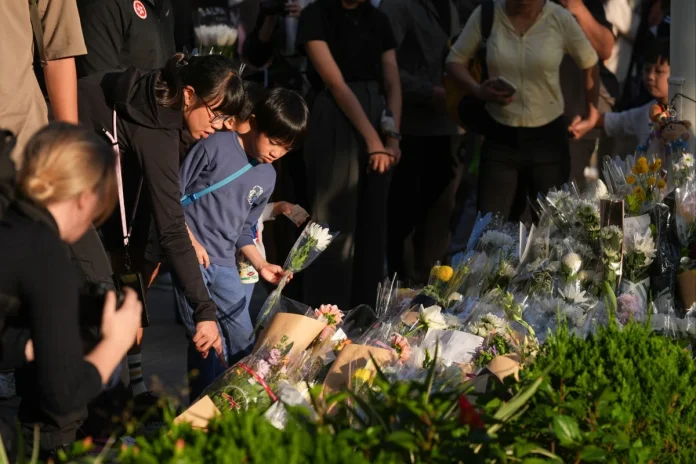
People leave flowers as Hongkongers mourn the fire victims. (Photo: Eugene Lee/ South China Morning Post/The Editor)

THE EDITOR – Hong Kong began three days of official mourning on Saturday for victims of the city’s deadliest fire in seven decades.

South China Morning Post on Saturday (29/11/2025) report that officials led by Chief Executive John Lee Ka-chiu observed a three-minute silence at the government’s headquarters in the morning, with condolence books being set up across all 18 districts between 9am and 9pm until Monday for members of the public to leave their messages.

National and Hong Kong flags at all government buildings and facilities, including offices abroad, will also fly at half-mast from Saturday to Monday.

As of Friday, the inferno that engulfed the Wang Fuk Court residential complex in Tai Po has claimed 128 lives, with the status of 150 still remaining uncertain.

Recovery work continues on the fourth day as raging flames in all blocks have been brought under control.

The fire was first reported at 2.51pm on Wednesday and quickly escalated to the highest No 5 fire alarm blaze. Huge plumes of dark smoke billowed high into the sky as the flames rapidly spread to seven of the eight blocks in the estate.

Hotlines for help:

Casualty inquiry hotline of police: 1878 999

Health Bureau’s Mental Health Support Hotline: 18111

Tai Po District Office help desk at Alice Ho Miu Ling Nethersole Hospital for assistance and public inquiries: 2658 4040.

Aljazeera: Could Trump’s Plan for Alcatraz End This Indigenous Tradition?

Indigenous dancers perform as part of ceremonies on Alcatraz Island on November 28, 2019 [Allison Griner/Al Jazeera/The Editor)

THE EDITOR – The memories come back in flashes: the ink-black night, the whipping cold, the dark waves lapping at the side of the boat as Tashina Banks Rama stepped on board.

Tashina was only a child when it started. But every November, on Thanksgiving Day, she and her younger sister would blink awake in the early hours of the morning to join her parents on the edge of the San Francisco Bay.

It was always freezing, always quiet, at least at first.

As she hopped from the pier to the ferry, Tashina remembers hearing the water splashing below. Pendleton blankets and star quilts, patterned with radiating bursts of colour, would rustle out from bags as families piled on board. And as the streetlights and towers of the city faded behind them, a sudden drumbeat would rupture the silence.

Before them loomed a jutting rock, Alcatraz Island, surging out of the waves. The air felt heavy with intention as the boat lurched forward.

“All of a sudden, you have this feeling, this presence of spirituality and ceremony — that this is something serious we’re doing,” Tashina, now 51, She said in Aljazeera on Friday (25/11/2025).

“Even if you might not know who you’re with, you feel very safe because you’re all there for the same purpose.”

For nearly half a century, Alcatraz — best known for its infamous prison — has played host to an annual Indigenous tradition: a sunrise ceremony to greet the morning’s first rays of light.

For some, it is a day of thanks, a time to honour Indigenous ancestors and celebrate the continued survival of tribal nations across the Americas.

For others, it is a moment of “un-Thanksgiving”: an Indigenous response to the sanitised depictions of colonisation associated with the Thanksgiving holiday.

But this Thursday, as the sun rises on Alcatraz once more, longtime participants fear a new threat may end the gathering for good.

In May, United States President Donald Trump announced on social media that he had directed the Bureau of Prisons to “reopen a substantially enlarged and rebuilt ALCATRAZ, to house America’s most ruthless and violent Offenders”.

The plan has been widely denounced as impractical. The last penitentiary on the island closed in 1963 because of its dizzying operating costs, which were triple that of other federal prisons in the US.

There is no local source of fresh water on the island, and basic supplies have to arrive by boat. One estimate put the price tag for redeveloping Alcatraz at $2bn.

Still, Trump has maintained he plans to move forward, even sending his interior secretary and attorney general to scope the terrain in July.

But for Tashina, the loss of the island would mean the loss of a spiritual tradition that connects her to generations of Indigenous activists, including her father, American Indian Movement (AIM) founder Dennis Banks. The thought alone fills her with grief.

“It made me — and it actually still makes me — very sad,” she said of Trump’s order. “Thousands and thousands of prayers have taken place from that spot. It’s a sacred place.”

For one of the gathering’s original organisers, 70-year-old William “Jimbo” Simmons, the tradition traces its origins to a splash.

In 1969, Indigenous student organisers leapt into the San Francisco Bay and swam to Alcatraz’s jagged sandstone shores, in an effort to reclaim the island from the federal government.

Their attempt was not the first. In 1964, a year after the Alcatraz prison closed, a group of Lakota activists briefly occupied the island on the basis that treaty law required unused federal property to return to Indigenous hands.

But 1969 would be a turning point. The first group to land on Alcatraz was quickly intercepted by the US Coast Guard, but a second group arrived weeks later, on November 20 — and with greater numbers.

Around 80 people landed on the island, launching a historic 19-month protest. For many, it was the start of the Red Power Movement, a period of activism in Indigenous communities across the country.

“I always felt that, as Indian people, our people are engaged in the longest war in the history of the Americas still today,” Simmons said.

“One of the things that brought it to life, for a lot of us, was the occupation of Alcatraz back in 1969.”

Simmons was a floppy-haired Choctaw teenager in Oklahoma at the time, stuck in an Indigenous boarding school.

The aim of the boarding school system was to assimilate Indigenous youth into white society. Simmons remembers that, while at the Fort Sill Indian School, administrators pressured students to cut their long hair, in order to better conform.

“Our spirituality was being erased from us through boarding schools, through assimilation,” Simmons said. “Our ceremonies were being banned around those times, too. Even the sun dance was banned.”

But Alcatraz offered a spark of hope. On Thanksgiving Day in 1969, a celebration was held: A peace pipe was lit, a prayer given, and a feast shared. Dancers in traditional regalia bobbed and twirled beneath a cloudless blue sky.

Restaurants like Bratskellar’s sent supplies from San Francisco, donating turkeys, cranberry sauce and cake. For a brief moment, the population on the island swelled to 300.

The event even made the front page of The San Francisco Chronicle newspaper the next day.

“I want to thank you for making it possible in my lifetime to see a rebirth of our culture, our religion and our ways,” a 65-year-old medicine man named Semu Huaute was quoted as saying in the newspaper.

The Alcatraz occupation was televised across the country. It helped inspire young people like Simmons to get involved in civil rights.

“Even though I wasn’t there at Alcatraz, I was aware of Alcatraz,” Simmons explained. “I always say that Alcatraz was the spark that woke up a lot of people.”

The occupation ended in 1971, when the federal government removed the last of the Indigenous protesters from Alcatraz. But the spirit of activism continued.

Simmons still remembers the day he met John Trudell, one of the leaders of the Alcatraz occupation. It was 1972, and he was a senior at the Fort Sill Indian School when Trudell came to speak to his history class.

“That was when I first started hearing about the American Indian Movement,” Simmons said.

At age 17, Simmons was feeling rudderless. He had quit school, but he did not want to stay home. Instead, he decided to join the army. But that too felt like a poor fit. So he went AWOL: absent without leave. He eventually landed in military prison.

“When I got out of prison, I realised I was probably in the wrong place at the wrong time,” Simmons said. He left for the San Francisco Bay Area in California.

That density is, in part, the legacy of a government policy known as “termination”. In the 20th century, efforts to dismantle sovereign Indigenous tribes led to a spike in migration to urban areas.

Simmons found himself joining a vibrant Indigenous community in California, one that included Dennis Banks, Tashina’s father and himself a veteran of the Alcatraz occupation.

“Our people were going through a spiritual awakening,” Simmons recalled.

Ceremonies had continued to be held on Alcatraz. Starting in November 1973, activist Adam Fortunate Eagle returned to the island with other veterans of the occupation to sing, dance and hold a moment of silence for those who had passed away.

He returned the year after, and the year after. By the end of the decade, groups like the newly formed International Indian Treaty Council had started to look towards the island as well.

“One of the things that we started thinking about was, ‘Well, we should do something at Alcatraz,’” Simmons, a member of the group, recalled.

At first, Thanksgiving Day — with its romanticised images of feasting Pilgrims and accommodating tribes — seemed like the perfect opportunity to reject mainstream narratives and protest the continued oppression of Indigenous peoples.

“We used to call it ‘un-Thanksgiving Day’ because we never really had anything to be thankful for on Thanksgiving,” Simmons said.

But not everyone agreed. Simmons remembers some community members hoped to use Alcatraz to celebrate Indigenous survival and pride.

“Some of our elders say, ‘Well, every day is a day of thanksgiving for us’. So we took that in too,” Simmons said.

Their plans came to a head on Alcatraz Island. The first time Simmons made the voyage, he felt a rush. The history he had heard unfold on TV and over the radio suddenly became very real, very present.

“I couldn’t believe that we were actually going to the island,” he recalled.

One of the early ceremonies they held there was in February 1978, to launch a protest known as The Longest Walk.

Simmons had volunteered to be one of the 24 activists who trekked on foot from California to Washington, DC, as a way of drawing attention to violations of Indigenous rights.

After five months and more than 4,800km (3,000 miles) of walking, Simmons reached the nation’s capital, where he and his fellow activists were greeted by thousands of supporters.

But the following year, at one of the first Thanksgiving ceremonies at Alcatraz, less than a hundred people showed up.

Still, he remembers how the beating pulse of the ceremonial drum carried him across the bay. As his ferry sidled up to the island, Simmons joined the drummer at the front of the group.

“That was always a big thing for me,” he said. “I was always in the lead there with the drum, walking, leading the people up there to where we were going to circle up and have our fire.”

Marching up the island’s steep incline, they reached the parade grounds, a flat lip of land extending southward. The island’s lighthouse, tall and austere, loomed overhead. There, with San Francisco’s skyline hazy on the horizon, they lit a sacred fire.

“It’s an everlasting fire. It’s a fire that we carry inside us,” Simmons explained. “You carry a fire, which is your spirit. And so, to me, every time that fire is lit, you’re taking care of that spirit.”

Medicine men, sun dancers and other spiritual leaders brought sacred items, including ceremonial pipes, to share. Everyone offered prayers.

For Simmons, it was a nourishing experience. It kindled a shared sense of resistance.

“For me, spirituality has a lot to do with who we are and what we become,” he said.

“Alcatraz has been that beacon of light that attracts a lot of people to our struggles and movement. When people come to Alcatraz, they walk away with a different understanding of being, of who they are.”

Those first Thanksgiving celebrations would stretch late into the night, well after the sunrise ceremony on the island ended.

One poster for the 1979 “un-Thanksgiving” advertised events until midnight, including speeches, dancing and a potluck dinner — as well as a tongue-in-cheek contest for the best Pilgrim costume.

For the 46 years since, the sunrise ceremony has continued and grown, according to Morning Star Gali, the California tribal and community liaison for the International Indian Treaty Council.

Now, the Thanksgiving gathering attracts throngs of participants, many of whom arrive long before the first ferry departs at 4:15am. Attendance, after all, is restricted to 5,000 people.

“We’ve really just had to cap it at that limit of 5,000,” Gali explained. “It would be more than that, but it is an island.”

The gathering has also become a starry event: The actor Benjamin Bratt, whose mother was part of the original Alcatraz occupation, is a regular participant. American football star Colin Kaepernick has attended. So, too, has Lethal Weapon actor Danny Glover.

The sheer number of supporters that arrive each year leaves Gali in awe.

“How amazing is it that 5,000 people are willing to get up at three o’clock in the morning, in the cold, wet weather, in all of the conditions, and be on the island to greet the sun and pray with us?” Gali asked.

This year, the guest of honour was scheduled to be Leonard Peltier, a famed activist who was granted clemency in January under then-President Joe Biden.

Many in the Indigenous community considered Peltier a political prisoner, wrongfully incarcerated for the 1975 shooting deaths of two federal agents. Peltier was ultimately unable to attend, though he did record a message that was played at the gathering.

“We have to celebrate these wins,” Gali explained. “We have to celebrate this freedom that was so hard fought for and so long fought for.”

A member of California’s Pit River tribe, Gali has coordinated the sunrise ceremony for the last 17 years. But her history with the event goes back even further: Her mother was pregnant with her during the original 1979 unThanksgiving event.

Some of her earliest memories involve being a pigtailed young girl, hoisted into her father’s arms as they rode the ferry to the island.

Even Gali’s name is a reference to the sunrise ceremony: a nod to the stars and planets that glimmer on the eastern horizon just before the sun comes up.

Most years, planning for the Thanksgiving ceremony is a months-long endeavour. Attendees approach Gali as early as January to ask for details, so they can plan their holiday travel.

But this year has brought more uncertainty than most. Not only did Gali and the other organisers have to contend with President Trump’s threats to redevelop the island, but they also had to deal with the longest government shutdown in US history.

Alcatraz remains under federal control, and conducting the ceremony requires permitting and coordination with the National Park Service, as well as a local ferry operator.

“With the shutdown, we’ve been asking, ‘OK, what are our contingency plans? What is our plan B? What is our plan C?’” Gali explained.

After nearly 43 days, the shutdown came to a close on November 12 — with only two weeks to spare before the Thanksgiving holiday. Organising for the ceremony has been nonstop ever since.

Gali said Trump’s plans to build a new federal prison on the island have also been part of her discussions ahead of this year’s event.

“It really doesn’t make any sense,” she said of Trump’s order, pointing to an ongoing, $63.6m effort to preserve the historic prison on the island.

That structure, as well as sites associated with the 1969 Alcatraz occupation, would have to be erased to make way for a modern prison. The mere thought reminds Gali of the disproportionate rates of incarceration among Indigenous communities in the US.

“Our messaging was just, ‘This is not the time to continue to incarcerate anyone, but especially Indian peoples on Indian land that has such a significant history,’” Gali said.

For Tashina, levelling the island would feel like the loss of something intimate. Being able to attend the sunrise ceremony, she said, “feels like coming home”.

Her father, Dennis Banks, lived in California from 1976 to 1983, and Tashina remembers how spectacular it was to be standing next to him on the windswept rocks, watching the sun pierce the night.

“He just thought it was so beautiful: the power of people coming together, the power of prayer,” Tashina recalled.

But should the wrecking ball come to Alcatraz, Simmons warned that activists today may borrow a tactic from Banks’s time.

After all, the 1969 occupation ultimately prevented the island from being redeveloped into a space museum. If a few hundred activists could stop the government then, Simmons found himself imagining what a few thousand could do now.

“We would reoccupy it,” Simmons said plainly. “We would go out there, and we would stay there.

Sumatra in Tears: Deadly Floods Shatter Tourist Dreams and Remote Paradise

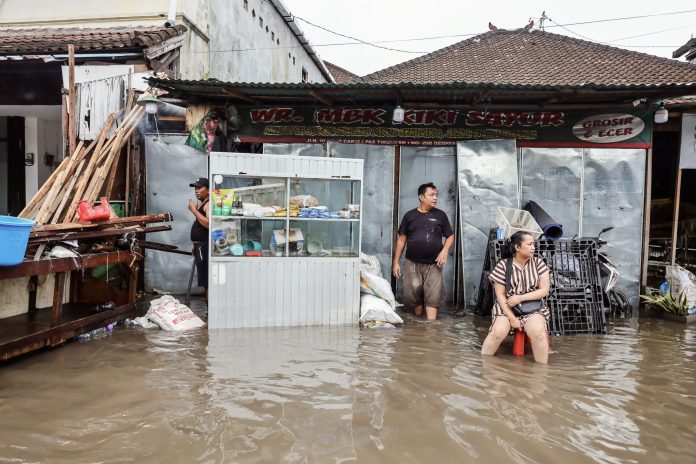
People try to clean up their shop after severe flooding in Denpasar, Bali, in September. (Photo: Anadolu/Getty/The Guardian/The Editor)

THE EDITOR – The vibrant heart of Sumatra now beats with sorrow. Our paradise landscape has turned into a scene of immense tragedy. This natural disaster has devastated local lives and shattered tourist dreams. Many travelers visit Sumatra for its raw, natural beauty. They seek remote jungles and stunning mountain views. Now, those same landscapes hold widespread destruction. The flash floods and landslides have been relentless.

Official Toll Confirms Catastrophe

Travel and Tour World on Friday (28/11/2025) said that recent monsoon rains caused rivers to burst their banks. This triggered massive, deadly landslides. The National Disaster Management Agency (BNPB) confirmed the rising death toll. As of Thursday, 69 people have died across the region.

Furthermore, 59 residents remain missing. The government acknowledges this number will likely increase. Rescue crews are battling terrible conditions. They search through thick mud and heavy rubble for victims. This official update paints a picture of profound loss.

The sheer scale of the disaster is overwhelming. Government records indicate more than 2,000 buildings were submerged. Many were located in small, picturesque mountain villages. In Padang City, West Sumatra, cars lie piled up like toys. Infrastructure damage is currently halting all regional access.

Emergency Status Declared

The Indonesian Government has mobilized aid. West Sumatra declared a disaster emergency response. This declaration started on November 25, 2025. It will run until December 8, 2025, or longer if needed. This step allows for faster resource mobilization. Authorities prioritize aid distribution and rapid assessment.

The BNPB Chief Secretary, Rustian, visited affected areas. He assured the public that needs will be met quickly. He focused especially on West Sumatra’s Padang Pariaman District. Officials are now considering alternative traffic routes. Key roads are no longer repairable due to river damage. This vital recovery work will take months.

Travel Routes Severed in North Sumatra

North Sumatra province reported 37 fatalities. Rescuers there are searching for 52 missing people. Search efforts face many hurdles. Mudslides, power outages, and zero telecommunications are primary issues. Provincial Police Spokesperson Ferry Walintukan spoke about the severity. He stated that many remote areas are simply unreachable.

The beautiful, rugged terrain is now a trap. South Tapanuli district saw 17 bodies recovered. Sibolga city accounted for eight more fatalities. Landslides in Central Tapanuli hit family homes. At least one family of four perished in the mud. This destruction impacts the whole region.

Humbang Hasundutan district reported four landslide deaths. Five villagers remain missing there. Even tiny Nias island saw one fatality. A main road was blocked by mud and debris. The Meteorology, Climatology, and Geophysics Agency (BMKG) issued further warnings. They predict extreme rainfall will continue next week. The government is even planning cloud seeding operations. This aims to reduce further rain and prevent more floods.

Disruption to West Sumatra’s Charm

West Sumatra is a favorite for nature lovers. It is home to stunning natural tourist destinations. This province reported at least 23 deaths. Five people are still officially missing here. Thousands of homes were completely flooded. Padang Pariaman district alone saw 3,300 houses submerged. About 12,000 residents had to flee to temporary shelters.

The popular Lumin Park residential area in Padang suffered badly. Six people drowned in the floodwaters there. Near the Anai Valley Waterfall area, seven bodies were recovered. This included one small child. Tons of mud, rocks, and trees swept through the valley. This is normally a tranquil spot for visitors.

Agam district, known for its scenic views, was hard-hit. Ten people were swept away by flash floods in Malalak village. Relief coordinator Hendri confirmed the recovery of these bodies. Another 200 residents are isolated in Jorong Taboh village. Landslides completely blocked all routes to the hillside community. This means rescuers cannot even confirm the missing data yet.

Tourism Faces Immediate Downturn

This disaster has severely impacted local travel. The government advises all non-essential travel to be postponed. Key tourist infrastructure is currently non-functional. Roads, bridges, and communication lines are ruined. Access to popular trekking and volcano areas is completely blocked.

This natural crisis affects more than just physical infrastructure. It deeply hurts the local people. Many rely on tourism for their income. Hotel workers, guides, and small shop owners face huge financial losses. The entire region needs time to recover and rebuild. This recovery must start with community support.

The Indonesian Government is rushing resources to the area. They are mobilizing aid via both air and sea routes. This is because land transport is impossible now. Coordinating Minister Pratikno stressed the urgent need for action. He urged residents to stay calm and follow all official instructions.

Looking Ahead

This tragedy calls for global compassion. The stunning beauty of Sumatra is currently veiled in sorrow. Our thoughts must remain with the people of Sumatra. They are facing an immense struggle to rebuild their lives. Their resilience will eventually restore this beautiful land. We must trust that the tourist pathways will one day reopen.

Indonesia Intensifies Search After Deadly Floods

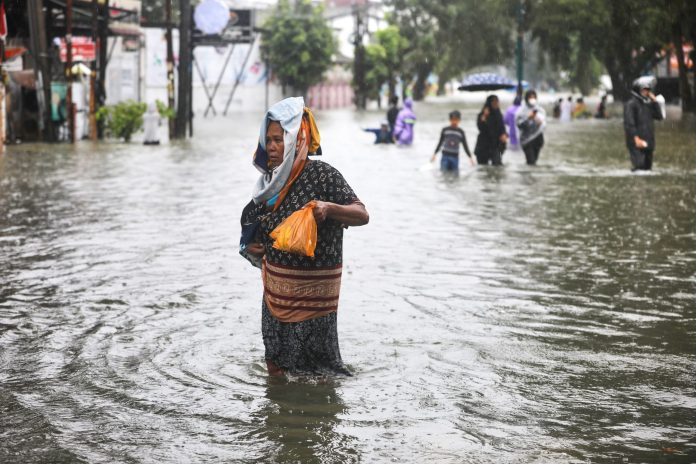
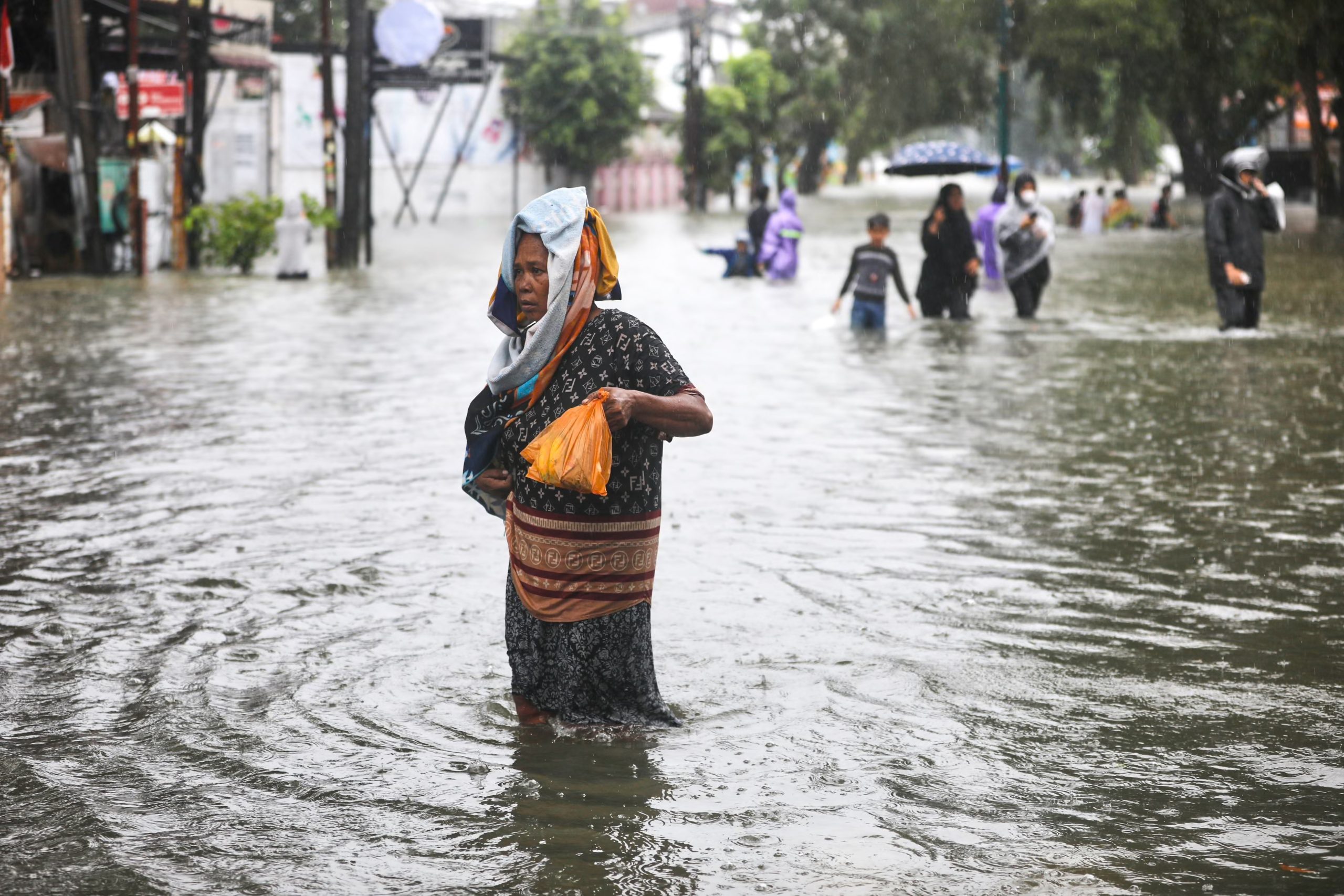
People wade through the water at a flooded street in Medan, North Sumatra, Indonesia. (PHOTO: Binsar Bakkara/AP/The Guardian/THE EDITOR)

THE EDITOR – Rescuers searched on Thursday in rivers and the rubble of villages for bodies, and when possible

survivors, after flash floods and landslides on Indonesia’s Sumatra island left 49 people dead and 67 missing.

Monsoon rains over the past week caused rivers to burst their banks in North Sumatra province on Tuesday. The deluge tore through mountainside village, swept away people and submerged more than 2,000 houses and buildings, the National Disaster Management Agency said. Nearly 5,000 residents fled to government shelters.

Borneo Bulletin on Thursday (27/11/2025) said that seventeen bodies were recovered by yesterday in South Tapanuli district and eight bodies in Sibolga city, North Sumatra provincial police’s spokesperson Ferry Walintukan said in a statement. In the neighbouring district of Central Tapanuli, landslides hit several homes, killing at least a family of four.

Rescue workers also recovered two bodies in Pakpak Bharat district and were searching for five people reported missing in Humbang Hasundutan, another district devastated by landslides that killed two villagers, Walintukan said. At least one resident died when mud and debris struck a main road on a tiny Nias island, he added.

“With many missing and some remote areas still unreachable, the death toll was likely to rise,” Walintukan said.

More downpours were forecast for North Sumatra province and the danger of extreme rainfall will continue until next week, Indonesia’s Meteorology, Climatology and Geophysics Agency said.

It recommended weather modification to reduce rain, and Disaster Agency Chief Suharyanto said cloud seeding would be done to prevent further rainfall and floods.

“We are deploying weather modification technology starting tomorrow so that rain does not fall during this emergency response period,” Suharyanto, who goes by a single name like many Indonesians, told reporters before visiting flood- and landslide-hit areas of Sibolga city on Thursday.

Cloud seeding involves dispersing particles into clouds to create precipitation, which would be done to redirect rainfall away from areas where search and rescue efforts were continuing.

Television reports showed rescue personnel using jackhammers, circular saws, farm tools and sometimes their bare hands to dig in areas marked by thick mud, rocks and uprooted trees. Rescuers in rubber boats were searching through a river and helped children and older people who were forced onto the roofs of flooded homes and buildings.

Floods were also occurring elsewhere in the vast archipelago, including in Aceh and West Sumatra, where hundreds of houses were flooded, many up to roofs, the disaster agency said.

Rescuers on Thursday recovered at least nine bodies after landslides triggered by torrential rains struck three

villages in Central Aceh on Wednesday, said the district chief Halili Yoga, who called on the local disaster agency to deploy and excavator to pull out at least two people buried under mud.

Aceh’s Disaster Mitigation Agency said nearly 47,000 people were displaced by floods in the province, forcing about 1,500 residents to flee to temporary shelters.

In West Sumatra province, rescue teams pulled six bodies of people who drowned in floods in Lumin Park residential area in the provincial capital of Padang, the local disaster agency reported. The flooding submerged more than 3,300 houses in Padang Pariaman district.

The local agency said rescuers were searching for 14 people believed to be buried under mud and rocks that hit hilly Jorong Toboh village, while landslides also cut off bridges and blocked main roads, isolating some residents.

Heavy seasonal rain from about October to March frequently causes flooding and landslides in Indonesia, an archipelago of 17,000 islands where millions of people live in mountainous areas or near fertile floodplains.

The Guardian: Flash Flooding in Sumatra Kills 69 As Rescue Crews Search Rivers for Survivors

Flooding in the Lubuk Minturun area of Koto Tangah, Padang City, West Sumatra, caused damage as tree debris and mud affected residential areas. (PHOTO: BNPB/Sutantaaditya.com/Shutterstock/The Guardian/THE EDITOR)

THE EDITOR – Flash floods and landslides on Indonesia’s Sumatra island have killed 69 people, with 59 missing as emergency workers search in rivers and the rubble of villages for bodies and possible survivors.

Monsoon rains over the past week caused rivers to burst their banks in North Sumatra province on Tuesday. The deluge tore through mountainside villages, swept away people and submerged more than 2,000 houses and buildings, the National Disaster Management Agency said. Nearly 5,000 residents fled to government shelters.

Television reports showed rescue personnel using jackhammers, circular saws, farm tools and sometimes their bare hands to dig in areas marked by thick mud, rocks and uprooted trees. Rescuers in rubber boats were searching through a river and helped children and older people who were forced on to the roofs of flooded homes and buildings.

In North Sumatra province the death toll rose to 37 as rescue personnel recovered more bodies on Thursday, said provincial police spokesperson Ferry Walintukan in a statement. Rescuers were searching for 52 residents reported missing, but mudslides, blackouts and a lack of telecommunications were hampering search efforts, he said.

“With many missing and some remote areas still unreachable, the death toll was likely to rise,” Walintukan said in The Guardian on Friday (28/11/2025).

Seventeen bodies were recovered by Thursday in South Tapanuli district and eight bodies in Sibolga city, Walintukan said. In the neighboring district of Central Tapanuli, landslides hit several homes, killing at least a family of four as well as one person found dead in floods in the city of Padang Sidempuan.

Rescue workers also recovered two bodies in Pakpak Bharat district and were searching for five people reported missing in Humbang Hasundutan, where four villagers were killed by landslides, Walintukan said. At least one resident died when mud and debris struck a main road on a tiny Nias island, and he added.

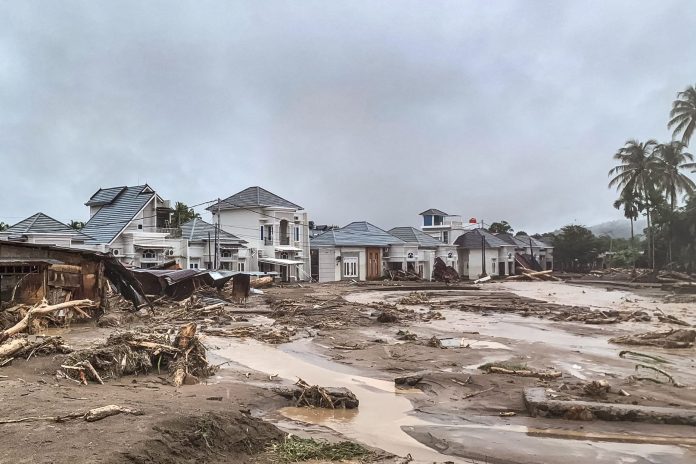
Piles of logs scattered left in Aek Garoga Village, Batangboru Districk, South Tapanuli after deadly floods hits the area on Wednesday (26/11/2025). (Photo: Instagram @infopspcom/THE EDITOR)

Floods were also occurring elsewhere in the vast archipelago, including in Aceh and West Sumatra, where thousands of houses were flooded, many up to roofs, the disaster agency said.

Rescuers by Thursday recovered at least nine bodies after landslides triggered by torrential rains struck three villages in Central Aceh on Wednesday, said the district chief Halili Yoga, who called on the local disaster agency to deploy and excavator to pull out at least two people buried under mud.

Aceh’s Disaster Mitigation Agency said nearly 47,000 people were displaced by floods in the province, forcing about 1,500 residents to flee to temporary shelters.

The flooding in West Sumatra province submerged thousands of homes, including more than 3,300 houses in Padang Pariaman district, forcing about 12,000 residents to flee to temporary shelters, the local disaster mitigation agency said.

The agency reported at least 23 people dead and five missing in West Sumatra province as rescuers recovered more bodies on Thursday, including the bodies of six people who drowned in floods in Lumin Park, a residential area in the provincial capital of Padang.

Scores of rescue personnel searching through a river around the Anai Valley Waterfall area in Tanah Datar district where tons of mud, rocks and trees were left from flash floods retrieved seven bodies on Thursday, including a child, Padang’s Search and Rescue Office reported.

People wade through the water at a flooded street in Medan, North Sumatra, Indonesia. (PHOTO: Binsar Bakkara/AP/The Guardian/THE EDITOR)

People wade through the water at a flooded street in Medan, North Sumatra, Indonesia. (PHOTO: Binsar Bakkara/AP/The Guardian/THE EDITOR)

Rescue teams and volunteers in the worst-hit Agam district recovered 10 bodies of people who were swept away by floods in Malalak village by Thursday, said Hendri, a relief coordinator who goes by a single name. He said rescuers still searching for five villagers reported missing.

‘Suddenly I heard a rumbling sound’

Lingga Sari, a Malalak resident, recalled the moment the flash flood struck as she was trying to put her restless child to sleep.

“Suddenly I heard a rumbling sound that kept getting louder,” said the mother of the one-year-old boy. Stepping outside with her child in her arms, she saw neighbours gathering in panic, shouting warnings of a sudden torrent. She and others rushed toward a small prayer house at a nearby intersection, but flood waters quickly surged in.

“We had to run again, racing through the rising water toward the rice field,” Lingga said.

Agam district chief Benny Warlis told The Associated Press that about 200 residents remain isolated in landslide-hit Jorong Taboh village on a hillside after recent landslides. Authorities have yet to confirm the number of people left homeless, dead, or missing by the devastation, as all routes to the area are cut off.

“We are facing difficulties verifying data on victims and those missing because access to the village, located on a steep hill, is completely blocked,” Warlis said.

Heavy seasonal rain from about October to March frequently causes flooding and landslides in Indonesia, an archipelago of 17,000 islands where millions of people live in mountainous areas or near fertile flood plains.

Tumpukan Kayu Memenuhi Desa. Warga Aek Garoga, Tapanuli Selatan Menanti Pertolongan

Ratusan ton kayu raksasa yang terbawa oleh banjir kini menjadi persoalan baru bagi warga Desa Aek Garoga, Kecamatan Batangtoru, Tapanuli Selatan, Sumatera Utara. (FOTO: @SAN’jaya melalui akun Tiktok/THE EDITOR)

THE EDITOR – Tumpukan kayu-kayu raksasa berwarna kuning kecokelatan akibat terjangan lumpur mematikan yang terbawa oleh arus sungai yang deras hingga Jumat (28/11/2025) masih memenuhi area pemukima penduduk yang tinggal di Desa Aek Garoga, Kecamatan Batangtoru, Tapanuli Selatan, Sumatera Utara.

Desa Aek Garoga juga terletak di perbatasan Tapanuli Tengah. Dari video amatir yang dibagikan oleh @SAN’jaya melalui akun Tiktok, terlihat anak-anak berjalan lunglai melintasi tanah becek yang mulai mengering.

Gelondongan kayu-kayu tersebut ukuran cukup mencengangkan. Hampir sebagian besar diantara kayu-kayu ini terlihat terpotong dengan rapi di bagian kedua ujungnya. Hanya terlihat satu unit alat berat dalam video berdurasi pendek ini.

Sejauh mata memandang, di video terlihat bila seluruh halaman dan jalanan desa dipenuhi oleh tumpukan kayu yang memenuhi hingga dinding rumah. 

Masyarakat hanya bisa duduk dan berdiri di pinggir bibir sungai yang terlihat mulai rapi dan bebas dari tumpukan benda-benda asing akibat banjir. Mereka berdiri menatap bagian tengah sungai yang sudah kembali surut sembari.

Padahal, sehari sebelumnya, air sungai yang meluap membawa puluhan ribu kubik kayu gelonggongan hingga menghancurkan jembatan desa.

Tak hanya oleh kayu, sungai di desa ini juga penuh dengan rumah-rumah penduduk yang terbawa oleh arus sungai yang deras. 

Situasi yang mencekam membuat banyak warga harus mengungsi ke tenda-tenda setempat. 

Si pengunggah video berharap tayangan yang mereka rekam menjadi viral agar segera mendapat perhatian dari pemerintah.