

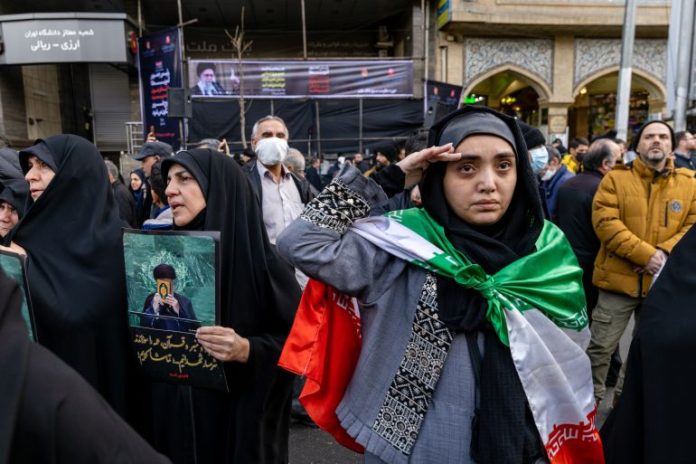

By Alireza Bahrami – THE AsiaN Editor
After more than 200 hours of losing all access to the international internet, I am writing to the audience of AsiaN and the Asian Journalists Association (AJA) at the first opportunity of limited connectivity. Why? For three reasons.
First, I have a moral obligation to AsiaN and AJA, and I must fulfill my duty as a journalist at all times.
Second, as a journalist, I have a responsibility to convey the most accurate account of the situation I am in to people around the world—even if doing so is dangerous for me.
Third, the last time I told the editor that I would send the article that night or the following morning, I lost access a few hours later and was unable to send any text. That situation lasted for 10 days. This could happen again. Therefore, I must use this opportunity immediately.
Experience has shown that writing an analytical article requires careful consideration of all aspects. That is why I initially asked the editor for 48 hours and later requested a few more. For this reason, what you are reading now is a more detailed analysis.
I am certain that the situation in Iran may appear more heated in your minds than it is in reality. This is often the case. Those who follow events from afar through media coverage tend to see a slightly exaggerated version of reality. In this instance, when all communication was cut off and the media sometimes published their own assumptions, the magnification was even greater.
That said, I personally experienced moments in my own city that I sincerely hope you will never have to face.
I will now try to present an almost accurate and complete narrative.
To do so, we must go back a little.
When Mohammad Khatami, the founder of the “Dialogue of Civilizations,” became president of Iran in 1997, Iran’s international position was improving. However, when Mahmoud Ahmadinejad, a right-wing politician, was elected president in 2005, conditions deteriorated.
When Barack Obama signed the JCPOA with Iran in 2015, the situation improved. However, when Republican Donald Trump was elected president of the United States, conditions worsened once again.
In 2024, Masoud Pezeshkian became president of Iran in an effort to prevent war. Nevertheless, in 2025, Israel ultimately attacked Iran.
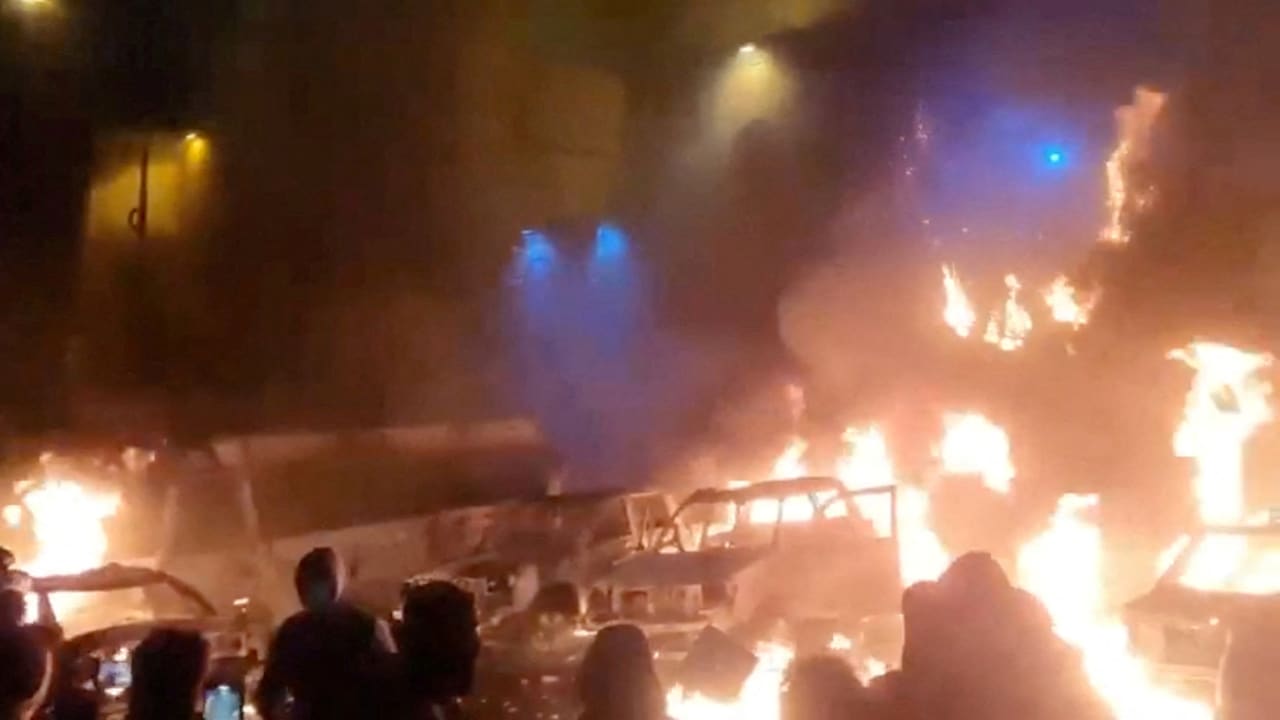
Whenever Iran’s political relations in the international arena improved, the economic conditions and welfare of the Iranian people also improved. Conversely, whenever Iran’s global political situation became more confrontational, the economic conditions and welfare of the people declined. U.S. economic sanctions made governance more difficult for the Iranian state, but they placed the greatest burden on ordinary Iranians.
Throughout these years, freedom and individual rights have remained persistent points of tension between the government and the people. This gap has been particularly wide among younger and newer generations.
IRANIAN OIL: FOREIGN WOLVES AND DOMESTIC FOXES
In addition to its unique geopolitical position, Iran has been a site of struggle between Eastern and Western powers over access to wealth—especially oil—over the past 120 years. In the speeches of President Trump, who has portrayed himself as a supporter of Iranian protesters, the word “freedom” has never been mentioned. In his most recent speech on Iran, he said only that he wanted to be a good and useful president for his own country.
In a previous initiative—his attempt to arrest the president of Venezuela—Trump made it clear that his objective was Venezuelan oil for the United States. Beyond its vast oil and gas reserves, Iran also possesses extensive mineral resources.
But this is not the whole story.
AUTHENTICITY CHECK OF THE PROTESTS
It is not only that President Trump values Iran’s natural wealth more than freedom. In any illiberal economic environment, corruption inevitably becomes entrenched. Foreign sanctions alone do not explain the hardships faced by the Iranian people; domestic exploitation of these conditions further tightens the pressure on society.
Trust networks responsible for bypassing sanctions—secretly selling oil and covertly transferring money into Iran—have long been among the structural problems burdening ordinary citizens.
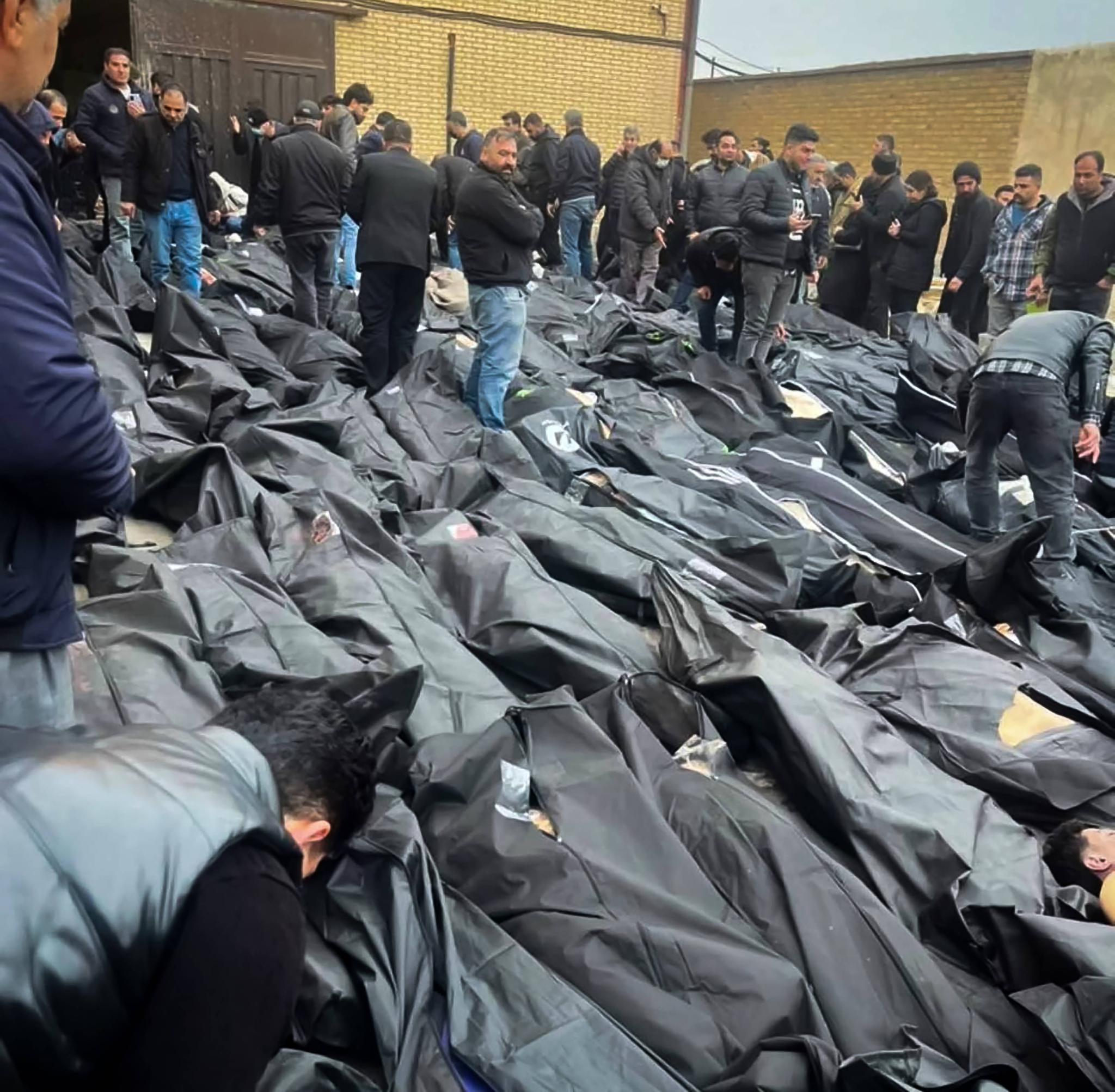
Despite the outage, images of the brutal violence against protesters have come out, triggering condemnation from the international community. MEK/The Media Express/SIPA/Shutterstock/The New York Post).
As noted earlier, this is still not the entire picture. In addition to foreign powers willing to initiate war to seize Iran’s natural resources, as in the case of Iraq, domestic power centers that benefit directly from economic sanctions share the same motivation.
In 2024, following the helicopter crash that killed Iran’s right-wing president, a left-leaning government came to power. It later announced plans to initiate currency reforms aimed at eliminating these trust structures from the national budget for the new fiscal year (the Persian year begins in early spring).
The launch of a new round of protests, coinciding with the parliamentary approval of this decision, created serious ambiguities. First came currency instability and a sharp devaluation of the national currency. Then, small protests erupted in parts of the marketplace. Iran’s religious clergy also expressed support for the protests through religious platforms and state television, over which they exert influence. This was unusual. However, the situation soon slipped beyond their control.
This does not mean ignoring the motives of the protesting people. Iranian society was a powder keg that needed only a spark. People are exhausted by recurring economic crises and have reached deep disagreements with the government. Some analysts describe this condition as an “erosion of political legitimacy.”
As a journalist, I have witnessed five periods of protest in Iran over the past 26 years. Each had its own characteristics. But this time is entirely different—differences that have created a distance between the protests and the intellectual class.
Compared with the protests of three years ago, this time the fire of unrest ignited in small and unfamiliar cities. Universities did not play a prominent role, and instead the bazaar emerged as the leader of the protests. Artists gave way to athletes. Women were present, but they did not play a dominant role. Slogans and demands were not centered on individual freedoms. This time, the bazaar—long the connective tissue between society and the country’s economic structure—became both the initiator and mediator of the protests, reminiscent of the period leading up to the 1979 revolution.
Meanwhile, over the past two decades, the Iranian government has steadily reduced the role and capacity of domestic media. In parallel, Persian-language media outlets were established outside Iran, with financial support from countries such as Saudi Arabia, the United States, and several European states.
Across several protest cycles, these foreign-based media outlets became key actors. Protesters sent videos to these networks, and their broadcast via satellite television and affiliated social media platforms encouraged others to join the demonstrations. This dynamic ultimately led to the abrupt disconnection of all Iranians from the global internet on the evening of Thursday, January 9—a shutdown that continues to this day.
The internet blackout, approved by the Supreme National Security Council, followed a call by the son of Iran’s former Shah urging people to take to the streets at 8 p.m. on Thursday and Friday, January 9 and 10. The large turnout initially demonstrated a peaceful protest on a massive scale. The Iranian government first acknowledged the protests as being rooted in economic and livelihood concerns. However, the demonstrations gradually turned violent.
At this point, a war of narratives began, with each side accusing the other of instigating violence. The crucial difference was that protesters had largely lost their media platforms, which were almost entirely controlled by government supporters. The government has yet to release official casualty figures, but protest-supporting and foreign media outlets have reported that several thousand people were killed during the violent street clashes. Whatever the precise number, the evidence suggests it was not small. The government has stated that around 100 police and military personnel were also killed.
DIFFERENCES IN THE PROTESTS
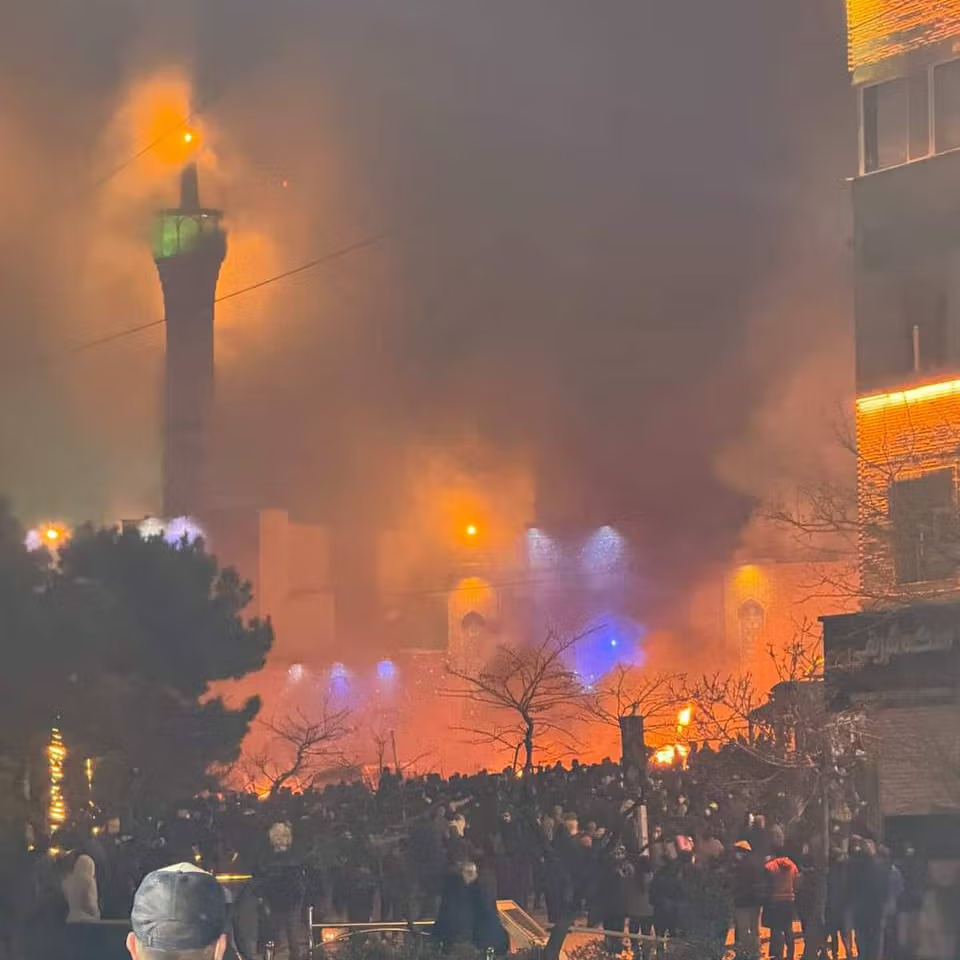
In earlier protests, the pulse of the movement lay in the hands of students, young men, and young women. Through unconventional forms of protest, they attempted to bring the future into the present and lift the veil. In contrast, in this period—when protests began among importers of electronic goods—it was as if protesters were searching for, and hoping to construct, a future.
Believing they could not compete with the state in terms of resources, protesters looked toward foreign assistance. At one point, Donald Trump raised expectations among Iranian protesters when he said, “Keep going—help is on the way.” Yet he never concealed the fact that he was a businessman willing to negotiate with anyone. Reports suggested that regional Arab states, as well as the Israeli prime minister, urged Trump not to attack Iran or to delay any military action. Meanwhile, the Iranian government warned it would target U.S. military bases and Israel in the event of an attack.
Military and political analysts now believe that the likelihood of a U.S. military strike on Iran has gradually diminished. At the same time, the Iranian government has demonstrated that it will persist in its positions despite criticism. The most likely outcome, therefore, is a prolonged and exhausting war of attrition—one that threatens lives, deepens disillusionment, and accelerates the migration of young people abroad.
Still, everything can change, despite political, economic, military, and sociological logic.
Today, Iranians are collectively in a state of sorrow. The killing of thousands of people, most of them young, has cast a heavy shadow over society.
All of this means that Iranians, from every perspective, feel that, in the words of their poet Nima, “the weather in our home is cloudy.” Will there be a storm? From which direction? Is this a struggle among powers, or a reordering of the world in a new era? Above all, Iranians are concerned about their home. They want it to be peaceful and progressing. Who is capable of achieving this? History will decide.